
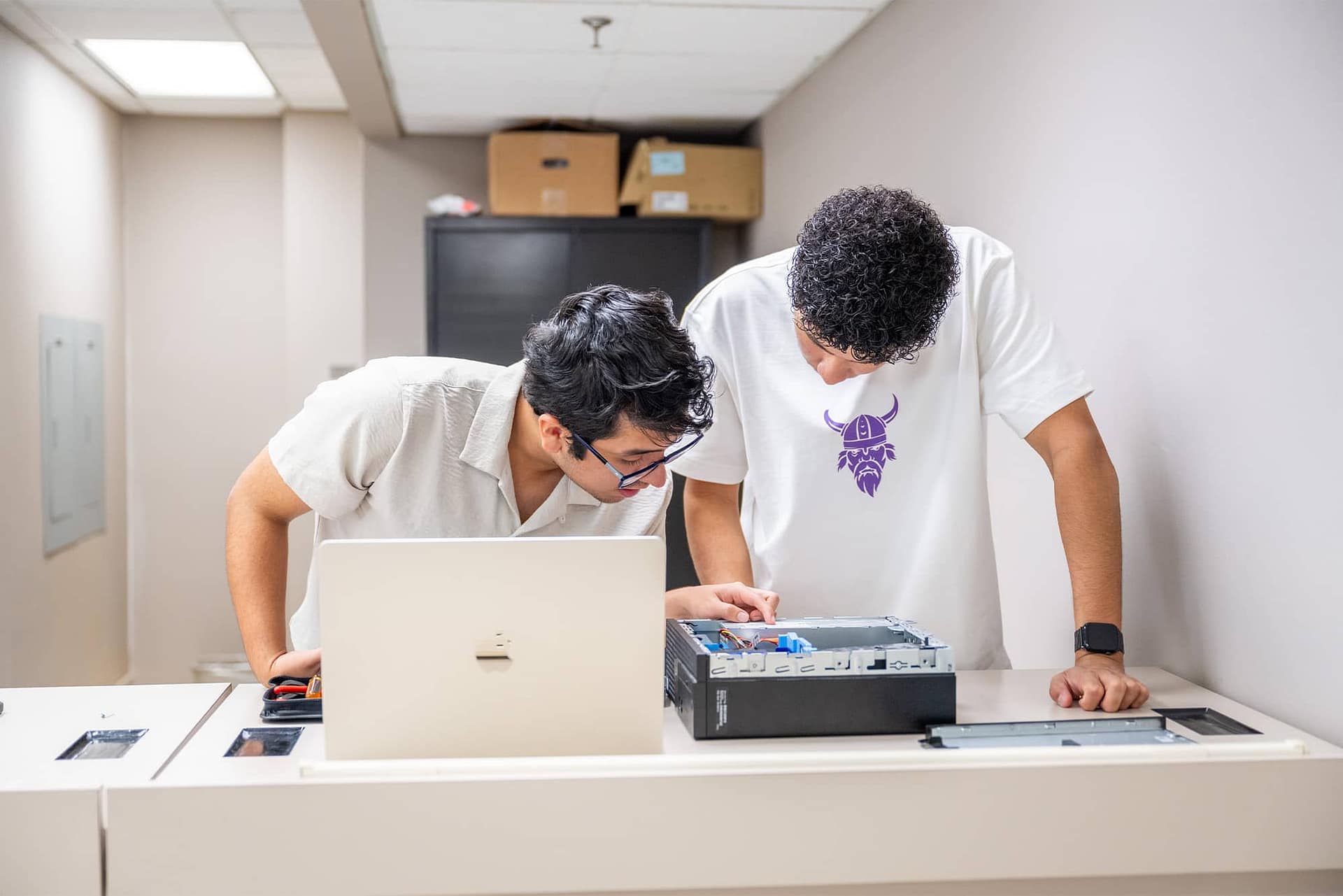
As a software developer at Science Applications International Corporation (SAIC), a defense agency, Noah Whalen’s (Cybersecurity ’26) daily responsibilities go beyond writing code. “Depending on the project, I may also be involved in areas such as server configuration, hardware provisioning, security, and ensuring that all the pieces work together,” he said. “My cybersecurity background helps me understand not only how to build an application, but also how to build and maintain it securely.”
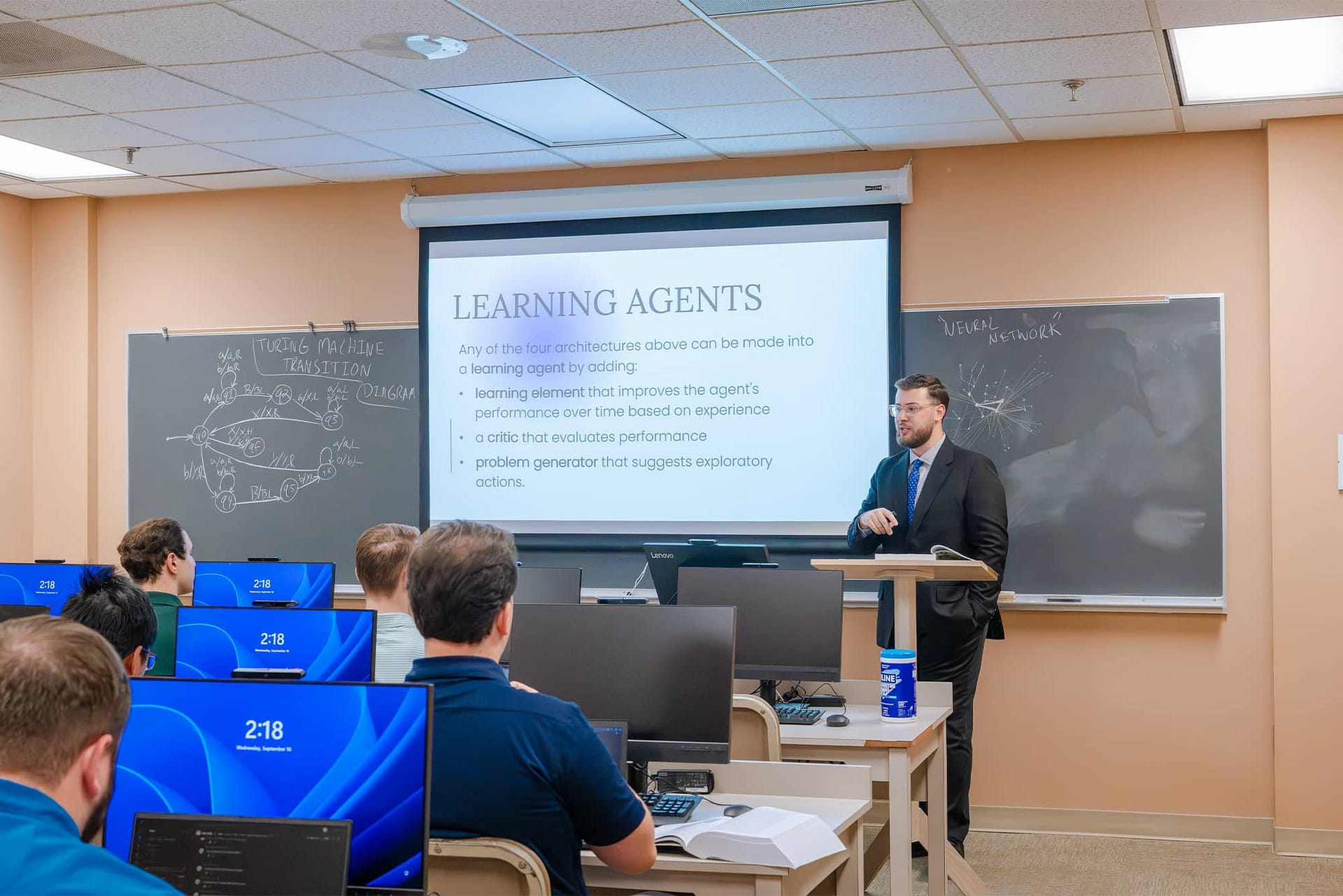
At Pensacola Christian College, both the information technology and cybersecurity concentrations are designed for students to explore the variety of the tech world and follow God’s leading in their future careers. “[These paths of study] prepare students to solve problems, think logically, design technical solutions, communicate effectively, and work in a team setting,” explained Dr. Michael Geary, chair of the engineering and computer science department. “Students are taught the ethical and legal responsibilities that they have within the computing profession.” And every topic is approached from the biblical worldview.
Information Technology
Students pursuing a bachelor’s in computing with a concentration in information technology will gain skills in system administration, database management, and coding that can translate into jobs as developers, system analysts, data analysts, or database administrators. The course sequence is intentionally broader, exposing students to the many facets of technology and providing a foundation for pursuing a variety of IT careers.
“We offer a core curriculum that all computing students will take that lays out a solid foundation on major topics and exposure to many skills in the computer science field,” said Dr. Jonathan Sparks, one of the IT instructors. “Then each different concentration will take students more in-depth into their topic of interest.”
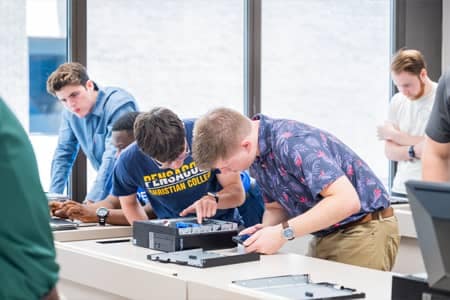
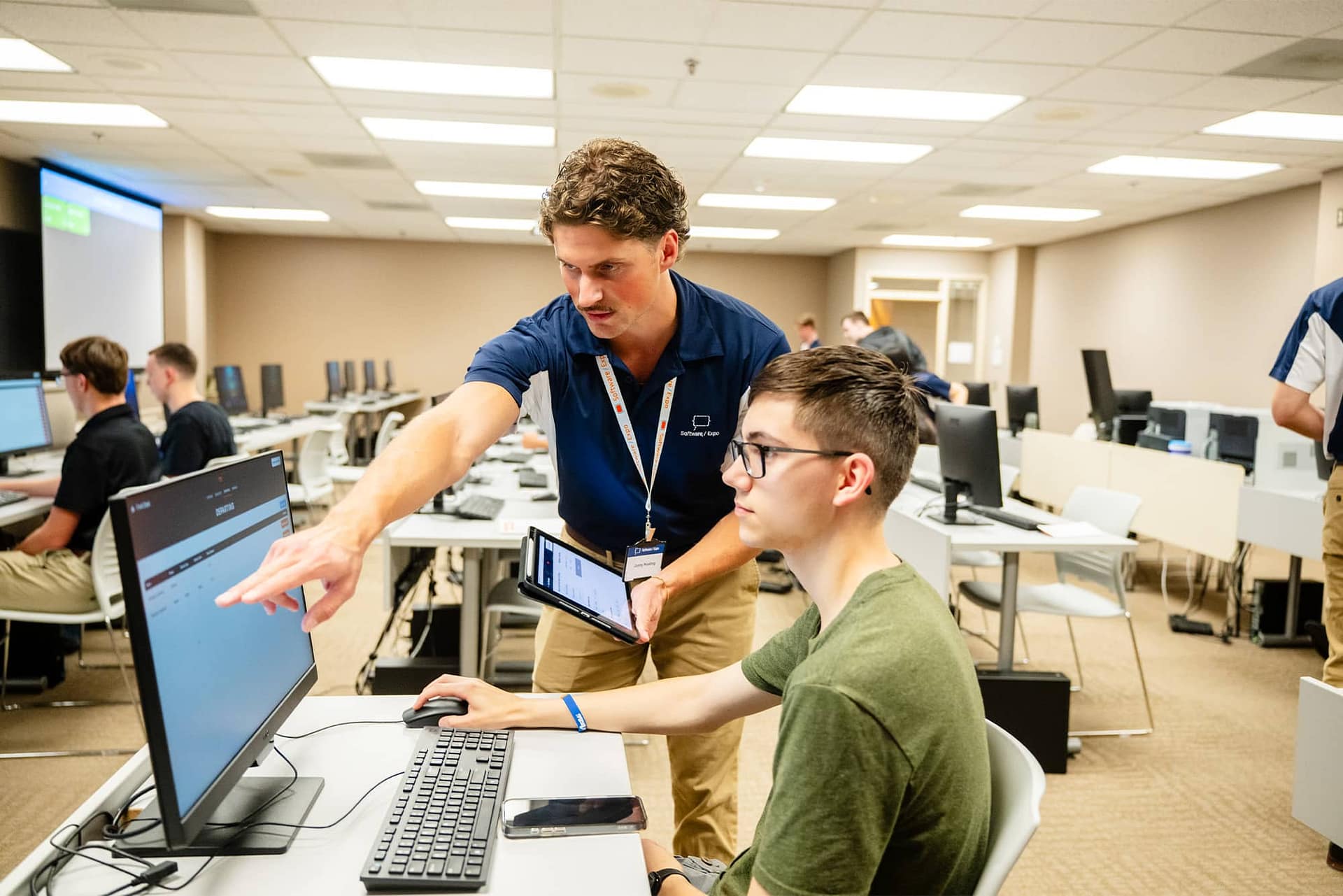
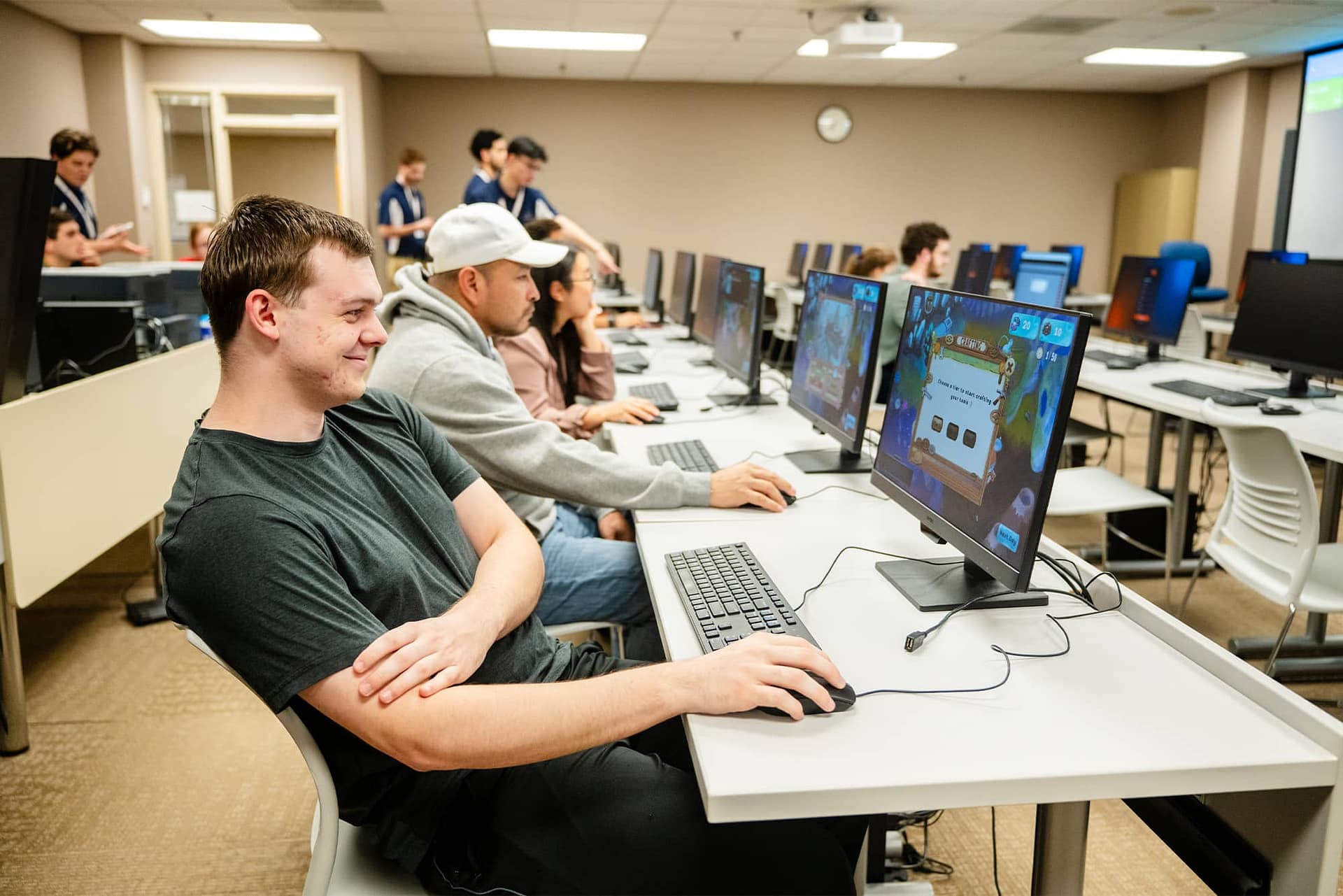
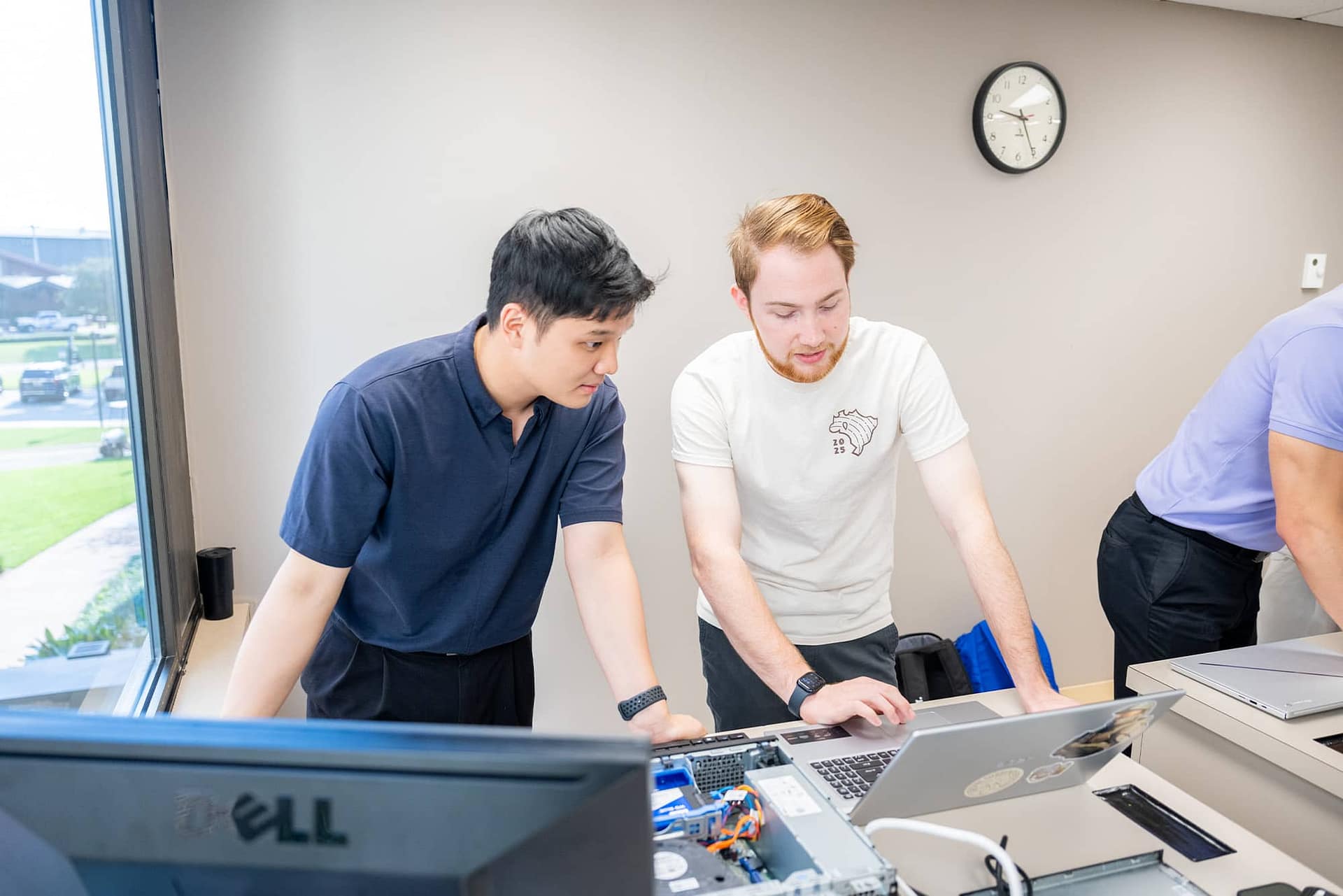
In early courses like Computer Hardware Fundamentals, students learn the physical components of the computer and how to build one. Introduction to Programming teaches students to tell the devices what to do and how to solve problems. “Together, these skills provide an excellent starting point for all the pieces that fit,” Dr. Sparks said. The curriculum builds from the foundation toward upper-level concepts and abilities. When students transition from the introductory level, they’ll apply what they’ve learned to various levels of assignments. “We constantly provide students with projects that hone their ability to take their book knowledge and convert it to practical experience.”
“We constantly provide students with projects that hone their ability to take their book knowledge and convert it to practical experience.”
Cybersecurity
Students studying cybersecurity delve into the tools and knowledge specific to the field through scripting, system administration, and computer security. Seniors completing their capstone project will simulate building, attacking, and defending computer systems in a virtual training environment that rivals those at local public universities in its memory and processing capabilities. Some career options include information security analyst, penetration tester, security architect, software security engineer, and more.
Throughout their studies, students explore practical software such as Cyber Security Evaluation Tool (CSET), Nmap, Metasploit, Kali Linux, and more, which allow them to use tools used on the job as well as those an attacker might use.
While senior Jeremy Neinas (MI) was exploring possible fields of study, he became interested in cybersecurity and all that it entailed. “I really like the idea of protecting information online,” he shared. “We had a speaker come in and talk about using our skills to scour the dangers of the web. I may end up in some digital forensics role.”
In his Information Security class, Jeremy experimented with scenarios and handled security incidents. On a particular project, he and his teammates began by evaluating the situation, planning, and developing controls to resolve it. Then the solutions were discussed in class. “I really enjoy the real-world feel that these exercises give and the opportunity to apply what I’ve learned.”
“As technology and AI become more integrated into our daily lives, staying informed, recognizing risks, and practicing good security habits are more important than ever,” said Hannah Bockisch (Cybersecurity ’25). She confidently identifies needs and finds solutions every day at NextEra Energy, Inc., one of the nation’s largest energy companies. “I’ve learned that you don’t need to know every technology going into a job, but having a solid foundation makes it much easier to learn and apply new skills.”
“As technology and AI become more integrated into our daily lives, staying informed, recognizing risks, and practicing good security habits are more important than ever.”
While completing the senior Cybersecurity Capstone Project, Noah enjoyed working with server infrastructure, security automation, and application development in a real-world setting. “At one point we lost access to our environment because the administrator’s password was lost or changed, and we had no backup or clear recovery procedure at [that] point in the project (which we obviously should have),” Noah admitted. But after persistence and troubleshooting, Noah regained access and restored the project, saving the class hours of double work. “That experience taught me the importance of planning for the unexpected and showed me firsthand why security guidelines emphasize sound administrative practice and recovery planning.”
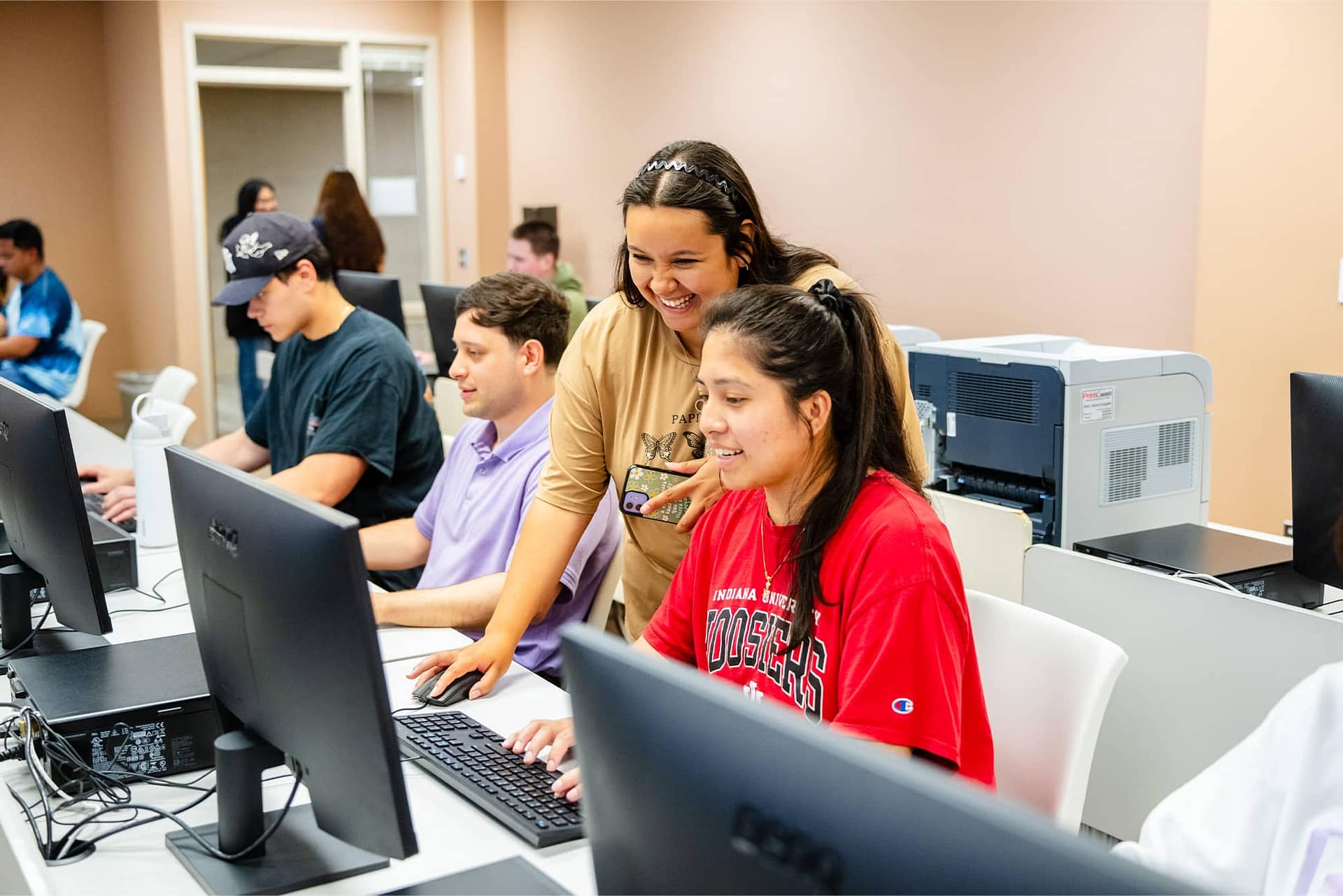
Having something new to learn is what makes cybersecurity a challenging and exciting field for Jhendry Herrera Del Rio (Sr., Dominican Republic). “I have always loved computers and helping others, so when I discovered cybersecurity, I realized it was a way to combine both of those interests,” she said. “I get to learn how technology works, solve problems, and find ways to protect people and their information.” Jhendry and her classmates apply what they’re learning in groups and virtual machines. “The virtual machines allow us to try different things and learn from our mistakes without worrying about damaging our actual computers,” she said. “Technology is constantly changing, so I think learning how different areas connect is one of the best things we can take away from our education.”
The Computer Science Field
For alumni like Noah Whalen and Hannah Bockisch, the programs they completed at PCC equipped them to readily recognize problems and present solutions confidently. This high-demand, stable career in computer science is ideal for students fascinated by how things work and motivated to protect data for people and organizations. Whether following the information technology or cybersecurity path, the tools and training that PCC offers mirror those in the corporate and government worlds, adding a showcase of skills and experience to résumés. Next steps may include entering their chosen field, earning certifications, or pursuing advanced degrees.
PCC values helping young people to see how God would have them influence the world for Christ. Each concentration is designed to prepare graduates to explore their options and realize the right fit for them.
“In many ways, cybersecurity is about stewardship,” said Dr. Jonathan Sparks. “Just as we are called to be faithful with the resources entrusted to us, we must also be diligent in protecting the information, systems, and people that depend on technology every day.”