
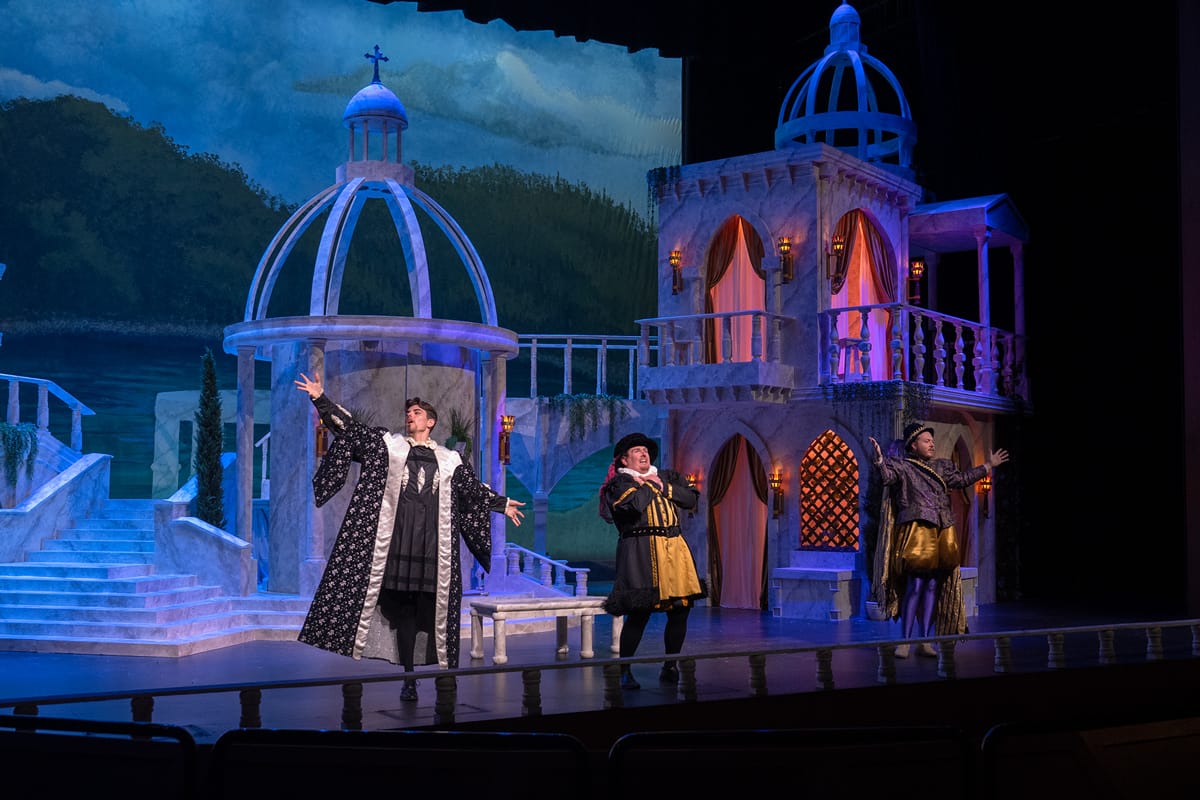
At the very start of any new production and before diving deep into rehearsals, artistic producer Liz Thomason (Performance Studies ’16, M.F.A. ’19) leads her cast straight through the entire script. “Why does this apply to us today?” she will then ask them, challenging them to think about the characters and playwriters’ intent. “I think that Gilbert and Sullivan, to some extent, have written in a way that transcends time and space, which is why a reset also works,” said Liz. A satire about Victorian bureaucracy, The New Mikado performed at Pensacola Christian College this spring embodied an Italian Renaissance twist by Lamplighters Music Theatre.
“One of my biggest goals is to help the cast understand the story they’re telling,” said Liz, “so that as a whole we can do a better telling of the story to the audience.” The complex tale of Niccolú (the Emperor’s son in disguise) and his beloved Amiam takes the audience on a roller coaster ride, dodging threats of executions and navigating the turns of social pretense.
Finding the Substance
Focused on presenting a clear reenactment of The New Mikado for an audience provided meaningful experiences for the cast members. “My favorite part of working on this production was watching each person learn their character’s motivation,” shared Dakota Wilson (Media Production ’14) actor for Coco, the Lord High Executioner of Tirmisu. He had played a part in the original Mikado two previous times. “I love the lightbulb moment people get when they hear a line delivered a certain way and then the whole motivation suddenly makes sense.”
After the first time Dakota played Coco (spelled Koko in the original version), his daughter was born. This year on opening night she was old enough to attend and watch her father perform. “I am thrilled and a little emotional that this got to be her first theatre experience and that I got to be on stage telling her this story.”
“I love the lightbulb moment people get when they hear a line delivered a certain way and then the whole motivation suddenly makes sense.”
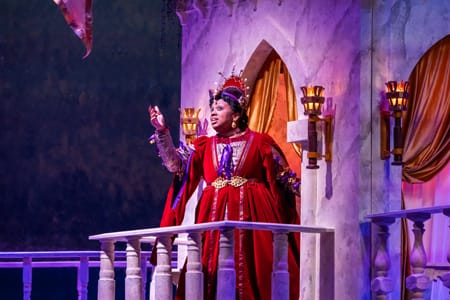
Senior Davita Reynolds (FL) who played Catiscià, an elderly lady in love with Niccolú, found it bittersweet that this was her last show as an undergrad. “I had a list of character types I wanted to play before I graduated,” she said. While she studied Catiscià’s character, Davita realized that she was actually playing a villain. “Not only do I get to check off [playing a villain], but I’m also doing it while being in a musical for the first time!”
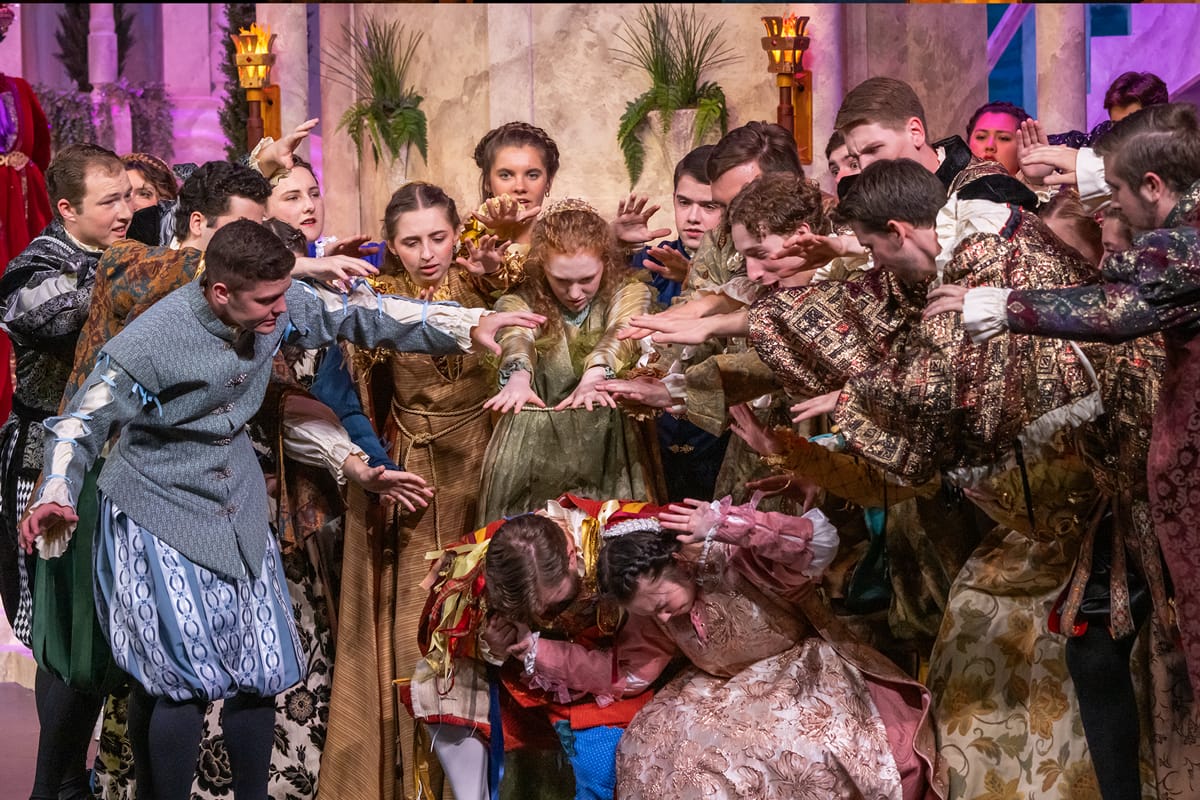
Jillian Sanchez, a senior from Alabama, shared that she “enjoyed getting to know other fellow college students or staff on such a unique and fun way.” Jillian hoped the audience could see the underlying message to develop individual standards and understand one’s purpose. “As a chorus character that represents mindlessness . . . many times we can find ourselves agreeing or following those with the ‘best/loudest’ argument.”
On the Surface
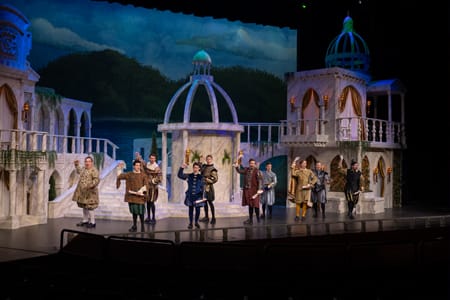
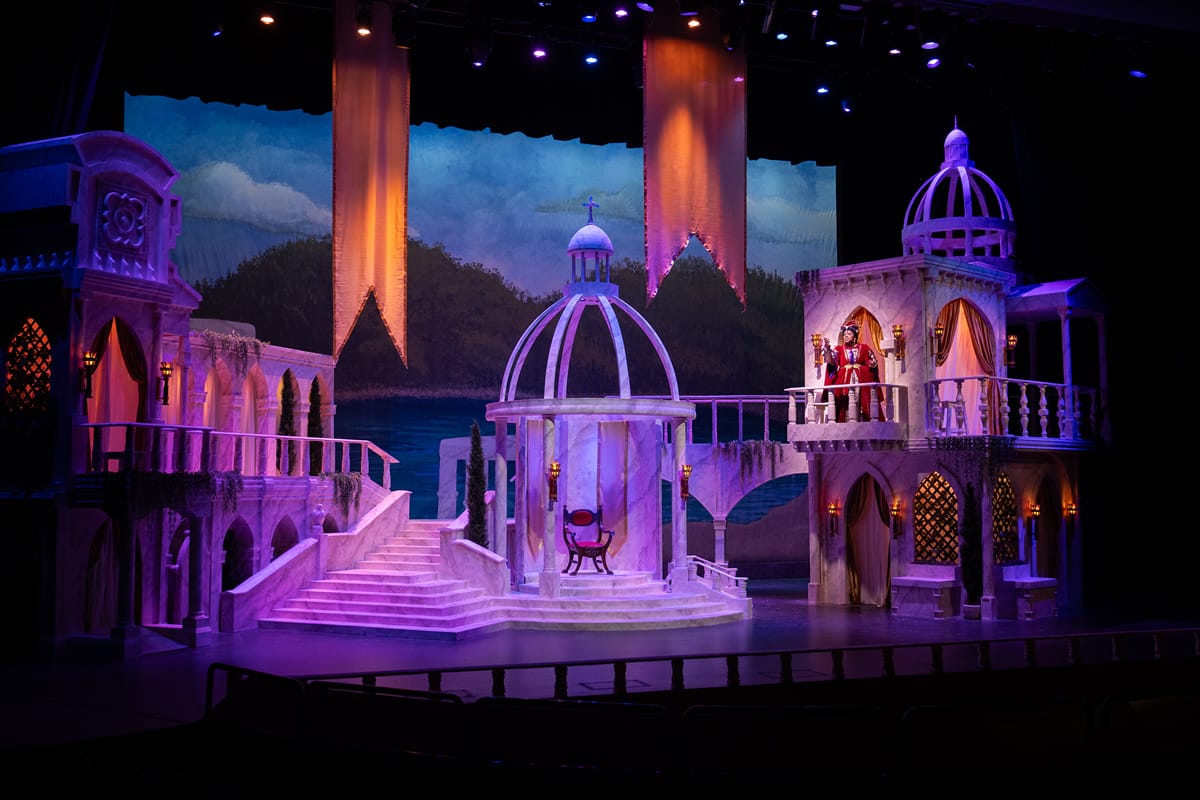
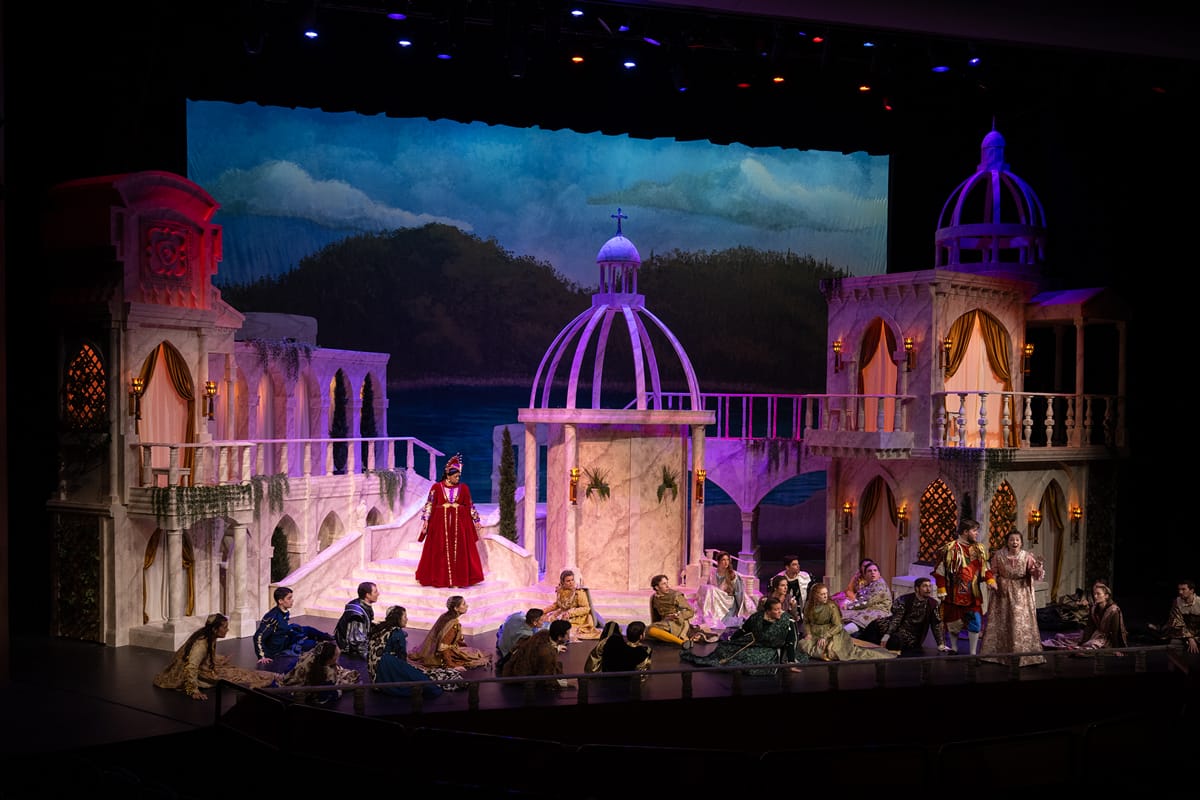
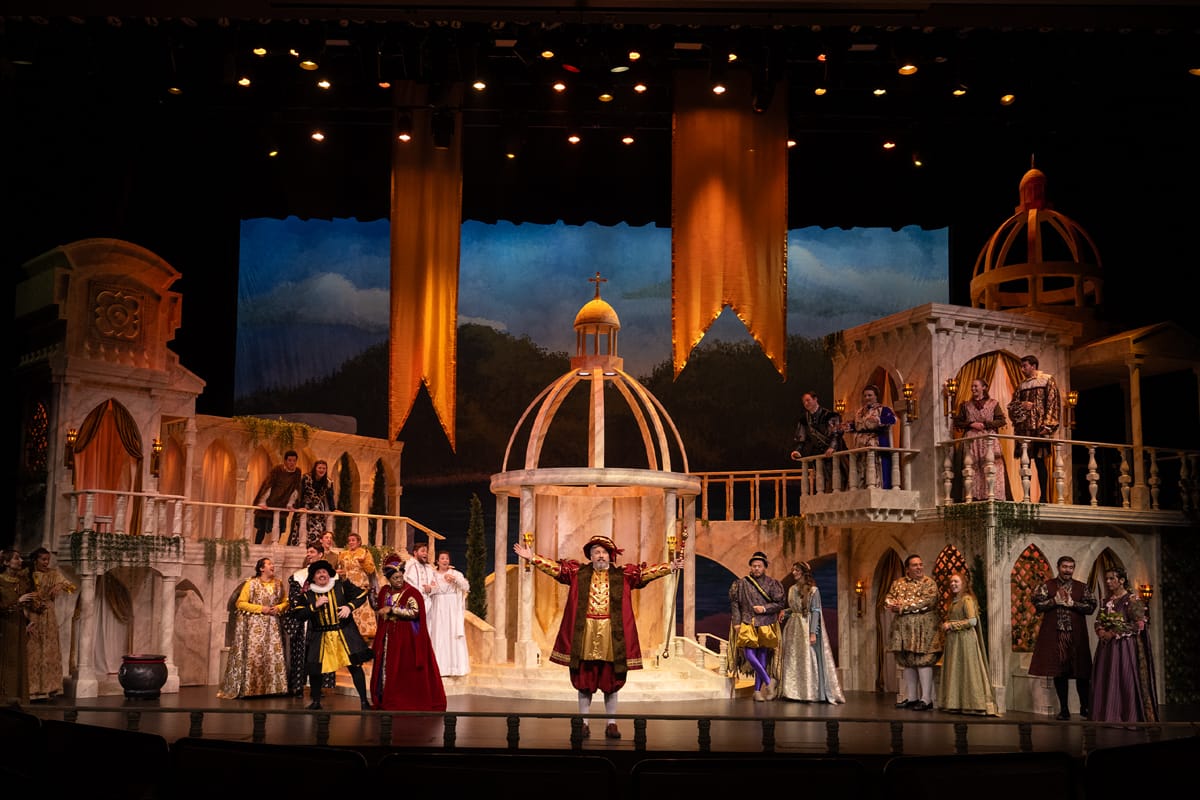
To visually portray the levels of superficiality on a stage, Liz Thomason intentionally chose details that suggested extravagance. “In many ways, the aesthetic spectacle mirrors the story itself: beauty and pageantry that threaten to distract from the deeper issues beneath the surface,” she said. “If you find yourself laughing at the characters’ elaborate titles, convoluted laws, and enthusiastic devotion to appearances, you may also recognize echoes of our own world.”
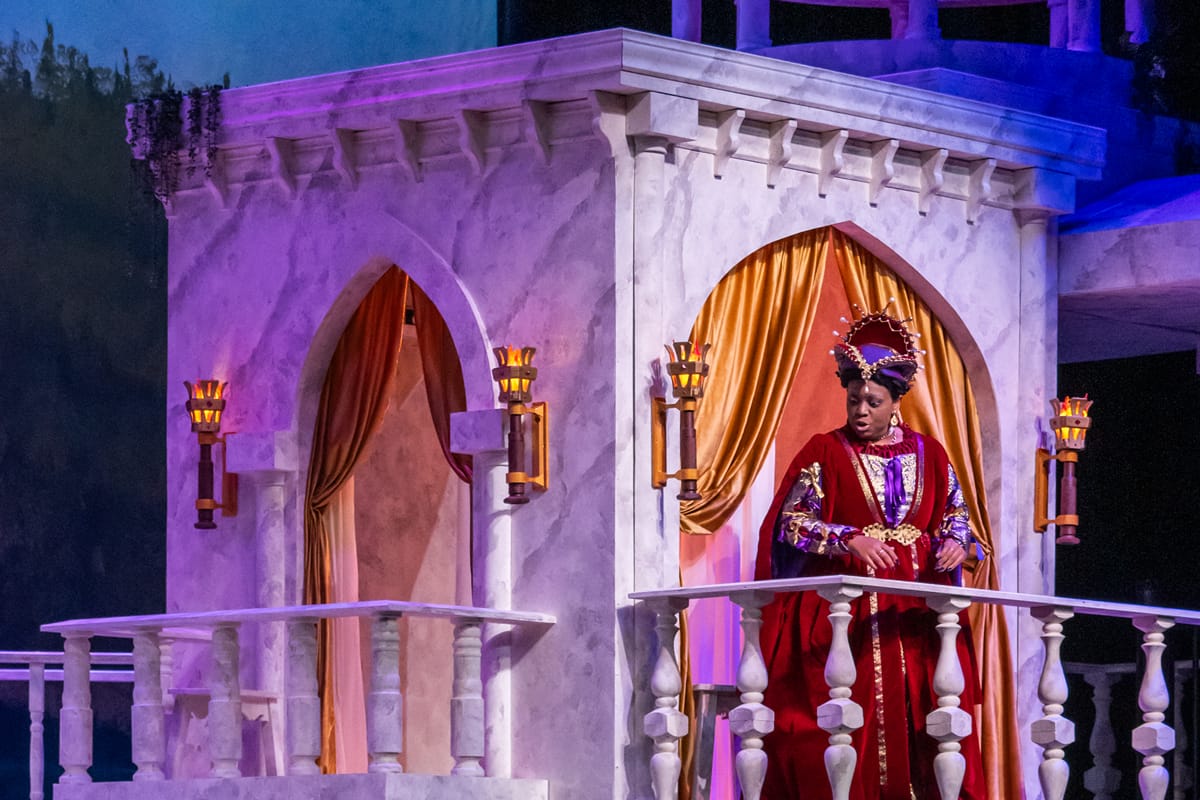
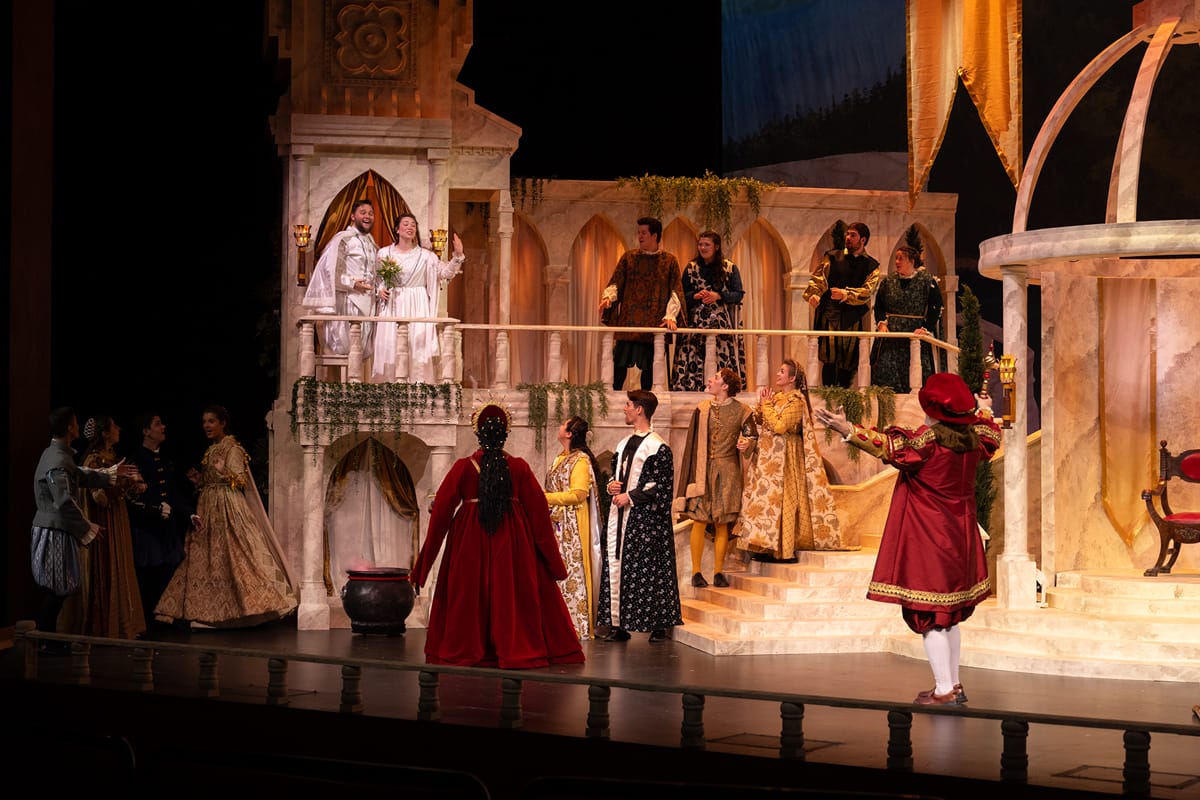
The stage itself, a light cream color of ancient marble, suggests a “whited sepulcher” and grandeur. The playbill was designed to look like an illuminated manuscript from the medieval period. And the actors floated across the stage with pomp and circumstance while dressed in costumes made of brocade, velvet, and glittering ornamentation.
“In many ways, the aesthetic spectacle mirrors the story itself: beauty and pageantry that threaten to distract from the deeper issues beneath the surface.”
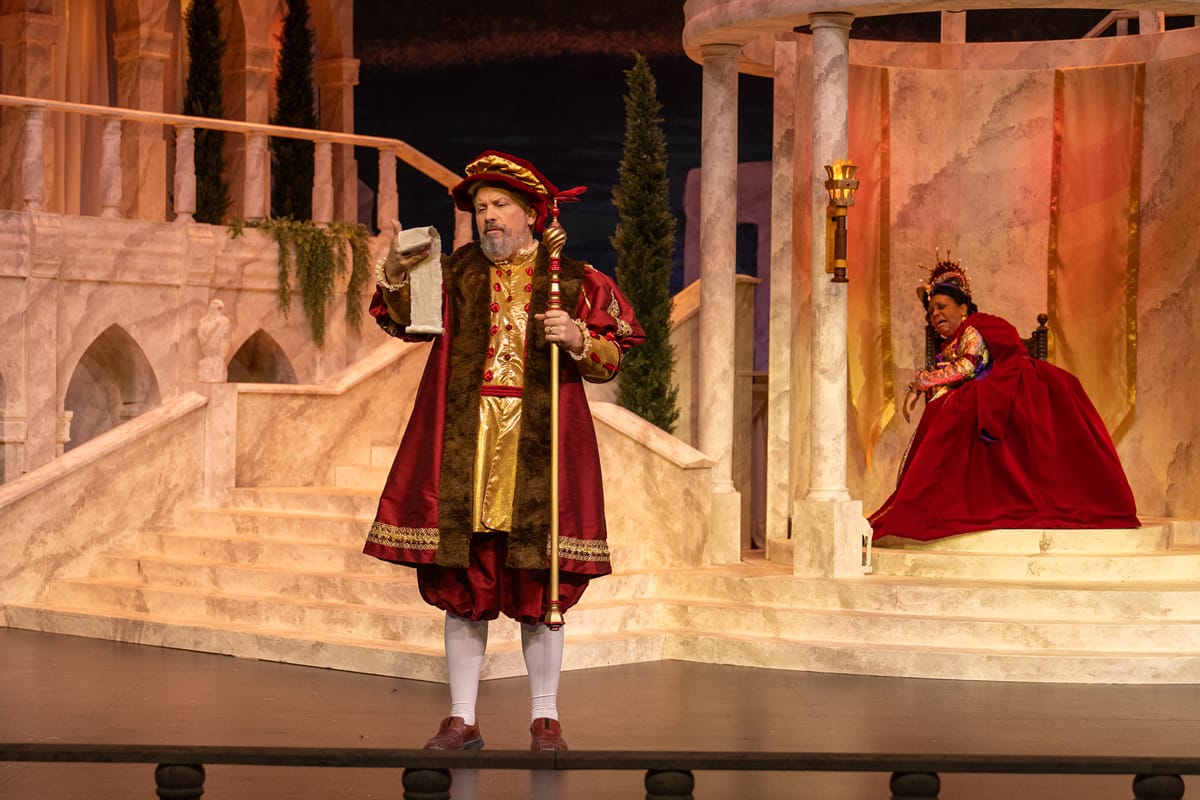
Another visual piece of the story included the unexpected entrance of Il Ducato, the Emperor of Milan. He had been concealed within the set only to be revealed about two-thirds through the play. His mere existence was synonymous with the law, influencing the townspeople to behave accordingly, dependent on his location. His presence all along, while unbeknownst to them, underscores their empty loyalty to the law.
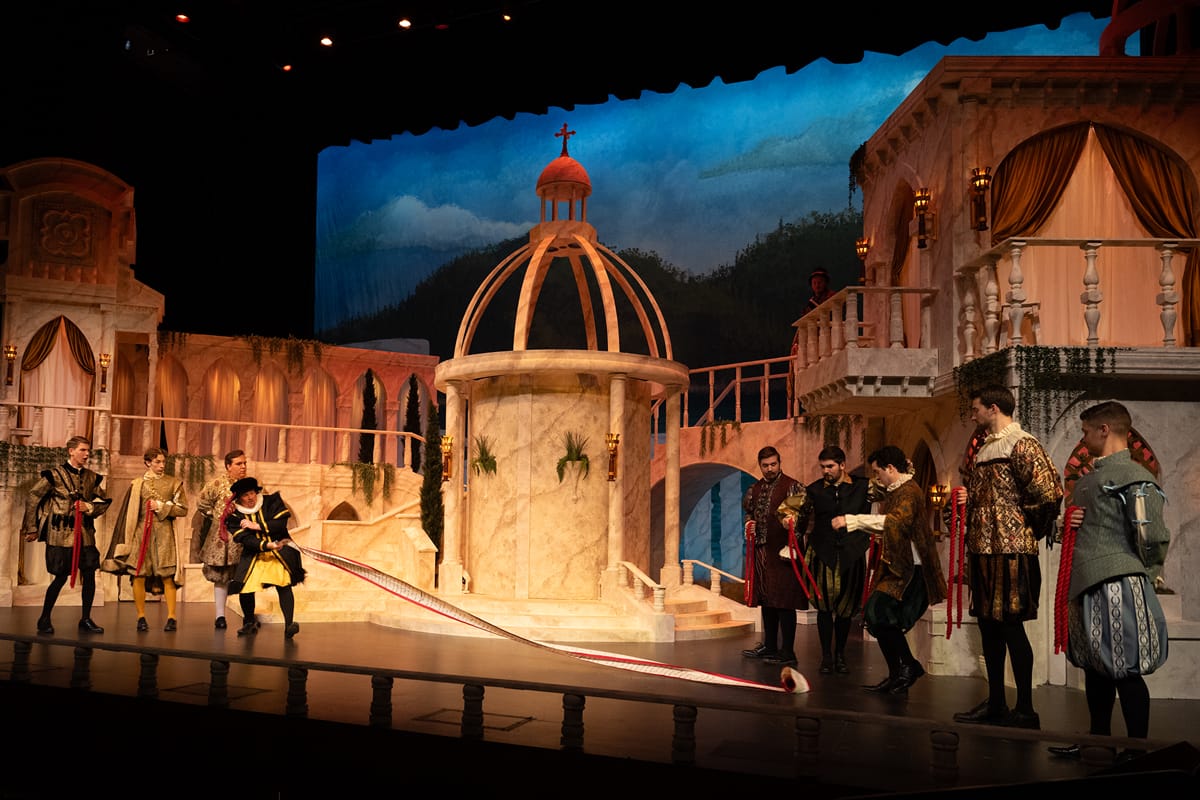
Chorus member Garret Hockett (So., IA) described his role on stage. “As a unified ensemble, we collectively respond and react to the increasingly absurd situations and ideas that unfold,” he said. “There’s a really fun moment where the men’s chorus uses red ropes during Coco’s first song, visually representing the idea of ‘red tape.’ This reinforces Coco as someone who relies on loopholes over real authority.” This is just one of many examples of characters following the same vein.
The Characters’ Lack
As the plot thickens, each character’s vice comes to light, revealing their lack of integrity and true love, among other qualities. “The tale of Coco teaches us that things can get out of control because of a lack of integrity,” commented Dakota Wilson. “The same rule applies to the rest of the town. Their dishonesty with exalting the Lord High Executioner was only done to ensure they could do whatever they wanted and without consequences. Then, when they’re questioned, every person absolutely unravels in an attempt to stay off the chopping block. Their selfishness got them into a huge mess and their pride almost ended each of their lives.”
“Their selfishness got them into a huge mess and their pride almost ended each of their lives.”
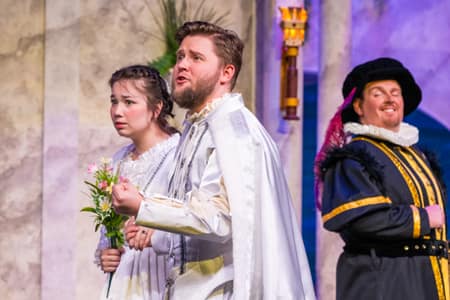
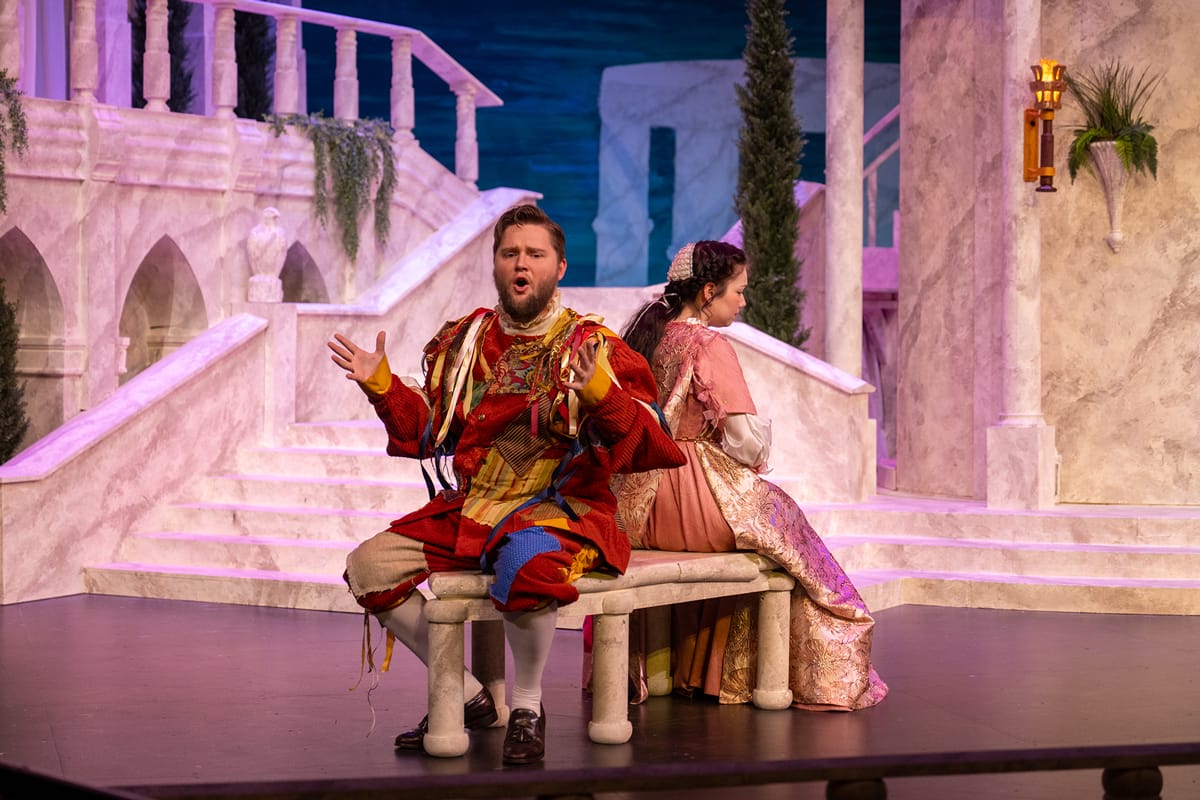
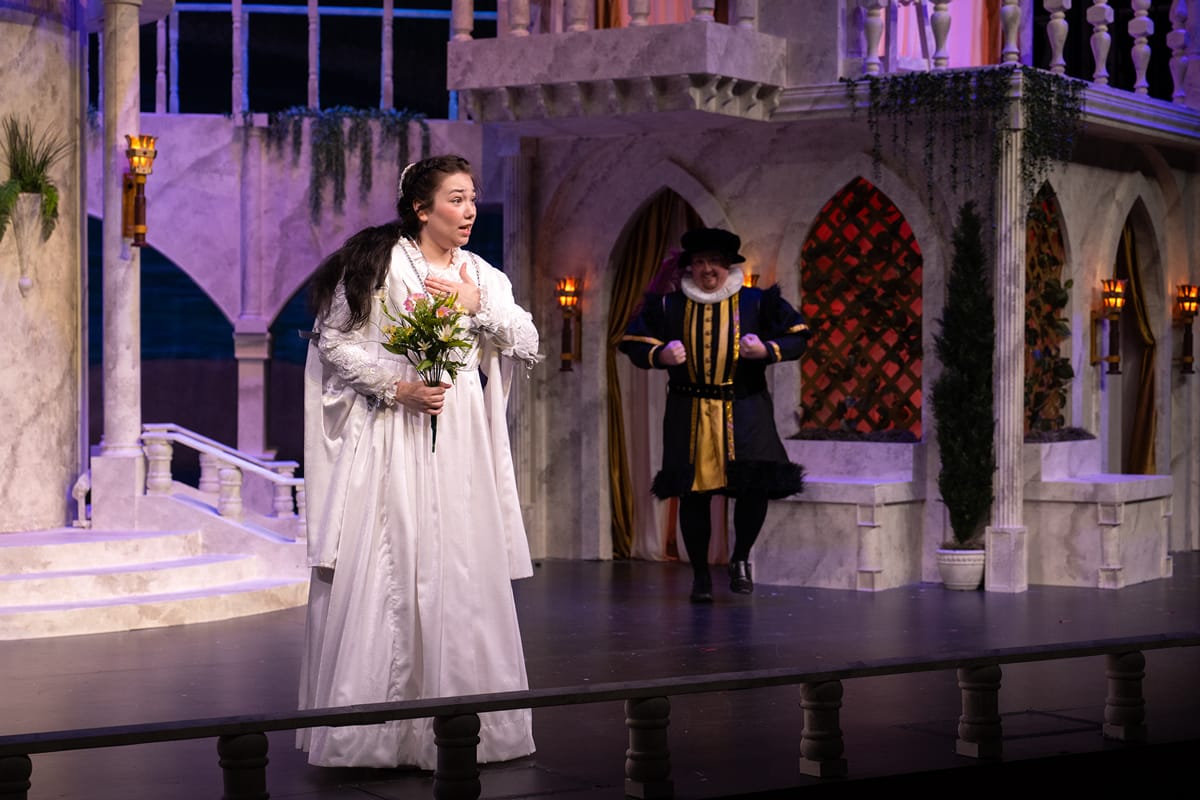
The Ducato’s son incognito, Niccolú pretended to be a minstrel to escape the responsibility of an arranged marriage. “Niccolú is a cavalier, impulsive young man,” shared Josiah Sayer (Music ’21, M.S. ’23) who performed this role. “Image and appearance influence Niccolú’s decisions, revealing the lack of depth in his character.” Overtly shallow, Niccolú is motivated to pursue the beautiful Amiam and abandon Catiscià.
The character Catiscià is someone who craves love and power for herself. “You will see it especially when she is around Ducato,” said actress Davita. “She pretends to have his best interest in mind, but the moment he turns his back, her true character shows.” Once another suitor becomes available, Catiscià’s love for Niccolú (or position?) is challenged. “I hope [the audience sees] how ridiculous superficiality is. But I want them to walk away truly enjoying the story, characters, set, and costumes,” Davita added.
When The New Mikado concluded, somehow and despite Niccolú’s dishonesty he ends up with Amiam, and in spite of his lack of integrity, Coco escapes his own execution and gains a wife in the end. Through extravagant visuals and conceited characters, this purposeful satire pokes fun at the absurdity found in Victorian bureaucracy. It was also written to be told in various settings but with a singular goal: to point out the flaws in culture and inspire the audience, cast, and crew to laugh and then look a little deeper into what motivates them.
Garret Hockett hoped that the audience came away entertained. “The New Mikado was packed with hilarious circumstances and some unexpectedly catchy songs. But I hope that they were also able to identify any unnecessary noise of distractions in their own lives that keep them from what’s important.”